Porcelain Patio Slabs in Wakefield: Why They Outperform Stone in Heavy Rain and Frost
Thinking about porcelain patio slabs in Yorkshire? We explain the material, the groundwork, and why proper installation makes all the difference in West Yorkshire.

Porcelain Patio Slabs: What Makes Them Different
Porcelain has become one of the most requested patio materials we work with across West Yorkshire and South Yorkshire. Homeowners in Wakefield, Barnsley, Dewsbury and beyond have seen it on Instagram or in a neighbour's garden and want to know whether it lives up to the look. The short answer is yes, but only when it is laid correctly. And in Yorkshire, where heavy rainfall, frost and clay-heavy ground are facts of life, correct installation is not optional.
So let us explain what porcelain actually is, how it behaves in our climate, and what goes into a job that lasts.
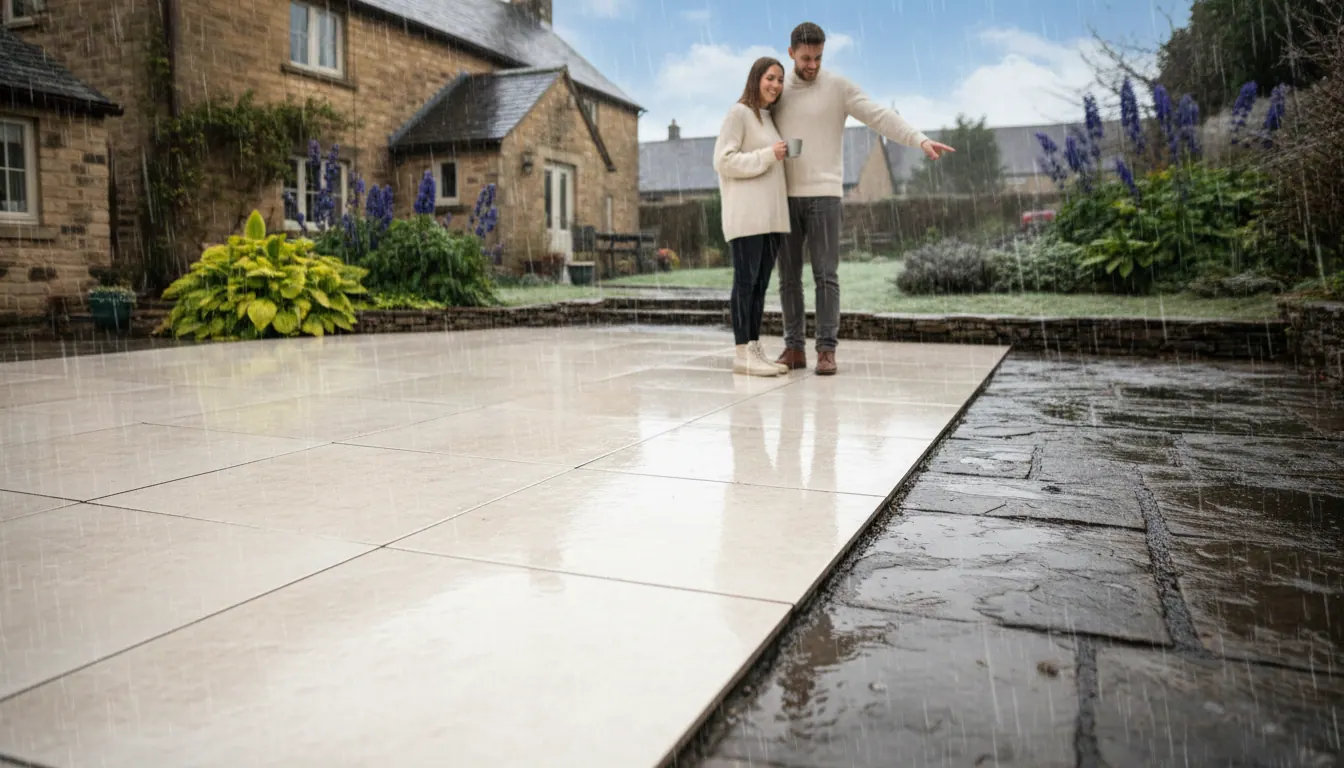
Porcelain paving is a fired ceramic tile, manufactured at extremely high temperatures. That process makes it dense, very low in water absorption, and frost-resistant. Unlike natural Indian sandstone, it will not stain easily from leaf tannins, moss or general Yorkshire weather. The surface stays consistent in colour and texture. For gardens that get heavy leaf fall in autumn, particularly in older residential areas with mature trees, that matters.
We lay a lot of Indian sandstone too, and it has its own qualities. If you want to compare the two for your garden, have a read of our article on Indian sandstone patio installation in Huddersfield, the preparation principles overlap, but the materials behave differently once they are down.
Why Yorkshire Weather Tests Any Patio Surface
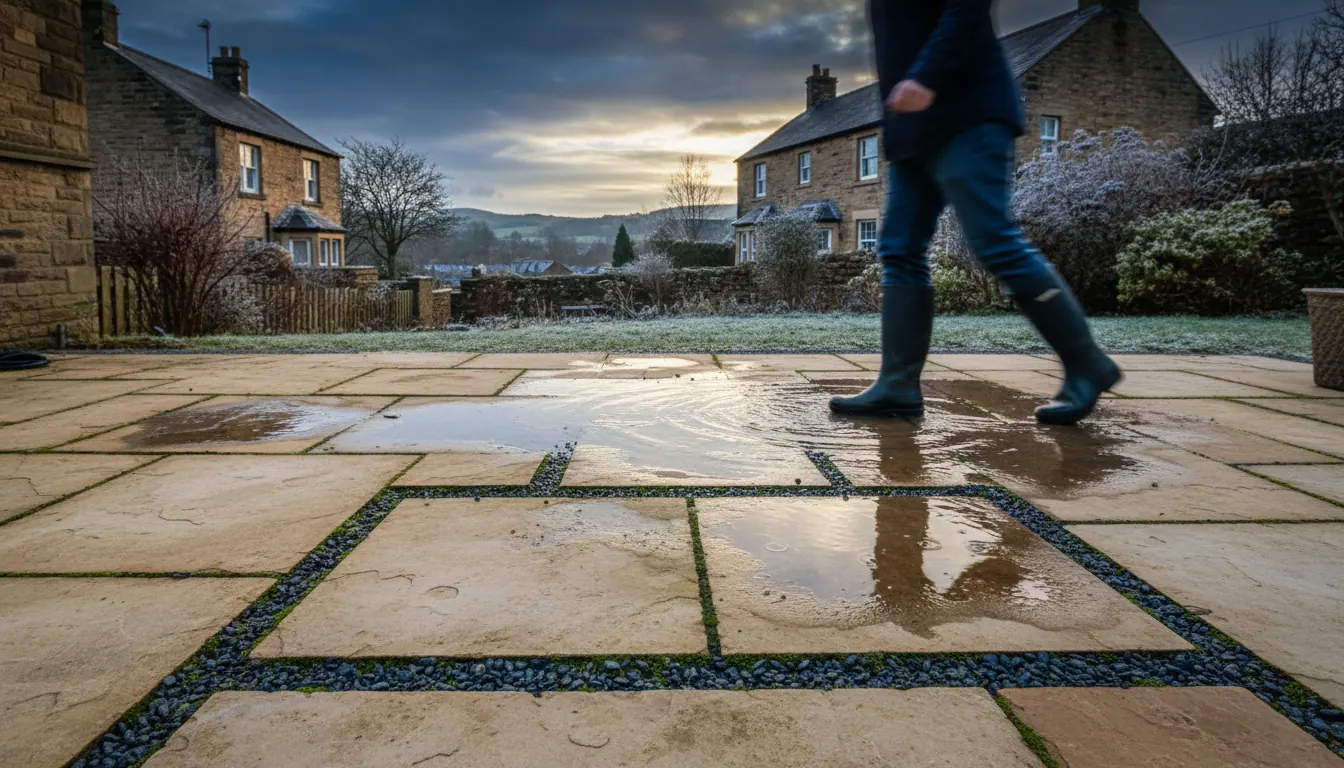
Barnsley, Penistone, Huddersfield and the surrounding areas sit on the Pennine edge. High rainfall is the norm. Winters bring frost, sometimes repeatedly through January and February. Clay soils drain poorly and move slightly with wet and dry cycles.
Any patio surface laid on a poor base in this climate will fail. The slabs lift, the joints crack, the whole thing goes uneven. We see it on jobs where someone has had work done cheaply, or tried to do it themselves. A porcelain slab is not going to save a patio that has been laid on three inches of sharp sand with no proper sub-base. In fact, because porcelain is a rigid, unforgiving material, it punishes a poor base more visibly than some other surfaces.
The ground beneath your patio has to be right before a single slab goes down.
The Sub-Base: Where the Job Is Really Won or Lost
This is the part of patio installation that homeowners rarely see, but it is where over twenty years of experience makes the biggest difference.
For a porcelain patio in West Yorkshire or South Yorkshire, we excavate to a depth that accounts for the sub-base, the bedding layer and the slab thickness. On clay ground, which is common across much of our service area, we go deeper and pay close attention to drainage. Clay holds water. If that water sits under a rigid slab and then freezes, it expands. The slab moves. The joint opens. The problem starts.
The sub-base is compacted MOT Type 1 limestone. It needs to be laid and compacted in layers. It is not something you can rush. Once that is solid and level, you have a platform that will not shift.
Falls matter too. A patio needs to drain away from the house. We set the falls at the sub-base stage. If you get that wrong, or ignore it, water sits on the surface, gets into the joints, and you end up with green algae and frost damage inside twelve months. With porcelain, people sometimes assume the low water absorption means they do not need falls. They do. Every patio does.
Bedding Porcelain: Full Mortar Bed, Not Spot Bedding
Porcelain slabs cannot be spot-bedded. Spot bedding means applying five blobs of mortar to the underside of a slab and tapping it down. It works on some materials in some applications. It does not work on porcelain.
Because porcelain is rigid and has no flex, any void beneath the slab creates a stress point. Walk on it, put a garden chair on it, and eventually the slab cracks. We use a full solid mortar bed. Every square centimetre of the underside is supported. The slab cannot rock, cannot flex, cannot crack under normal use.
Some porcelain products also have a very smooth back face, which means bonding can be an issue if the mortar mix is not right. We use a slurry primer on the back of the slab before it goes down. It is a small step that makes a real difference to adhesion.
Jointing: Getting the Gaps Right and Keeping Them Right
Porcelain patios are typically laid with tight joints, sometimes as narrow as two to three millimetres. That clean, contemporary look is part of the appeal. But tight joints need the right jointing compound.
Standard sand-and-cement pointing is not suitable for porcelain at tight joint widths. It shrinks as it cures, it cracks, and weeds find their way in. We use a flexible, resin-based jointing compound. It stays put, does not crack with movement, and does not give weeds a foothold.
The surface needs to be clean and dry when the jointing compound goes in. Porcelain is unforgiving here too. Any compound that dries on the face of the slab needs to come off quickly. Leave it and it hazes the surface. Getting the timing right, particularly in the unpredictable Yorkshire spring and autumn, is part of the craft.
Choosing the Right Porcelain for a Yorkshire Garden
Not all porcelain paving is the same. Thickness matters. Outdoor porcelain for patios should be at least twenty millimetres thick. Thinner tiles designed for internal use or for laying on a screed frame are not suitable for a traditional mortar-bed installation in a garden exposed to Yorkshire frost.
Finish matters too. A polished or high-gloss porcelain looks striking in a showroom but becomes a slip hazard when wet. In West Yorkshire and South Yorkshire, where gardens are wet for a good part of the year, we recommend a matt or textured finish with a decent slip rating. It still looks clean and contemporary without becoming dangerous in October.
Colour and format are personal choices. Large format slabs, 900mm x 600mm or bigger, give a very contemporary look and work well in a flat or gently graded garden. On a sloping plot that needs terracing or steps, smaller formats can be easier to manage and look more in keeping with the stone-built properties common across Huddersfield, Batley and Dewsbury.
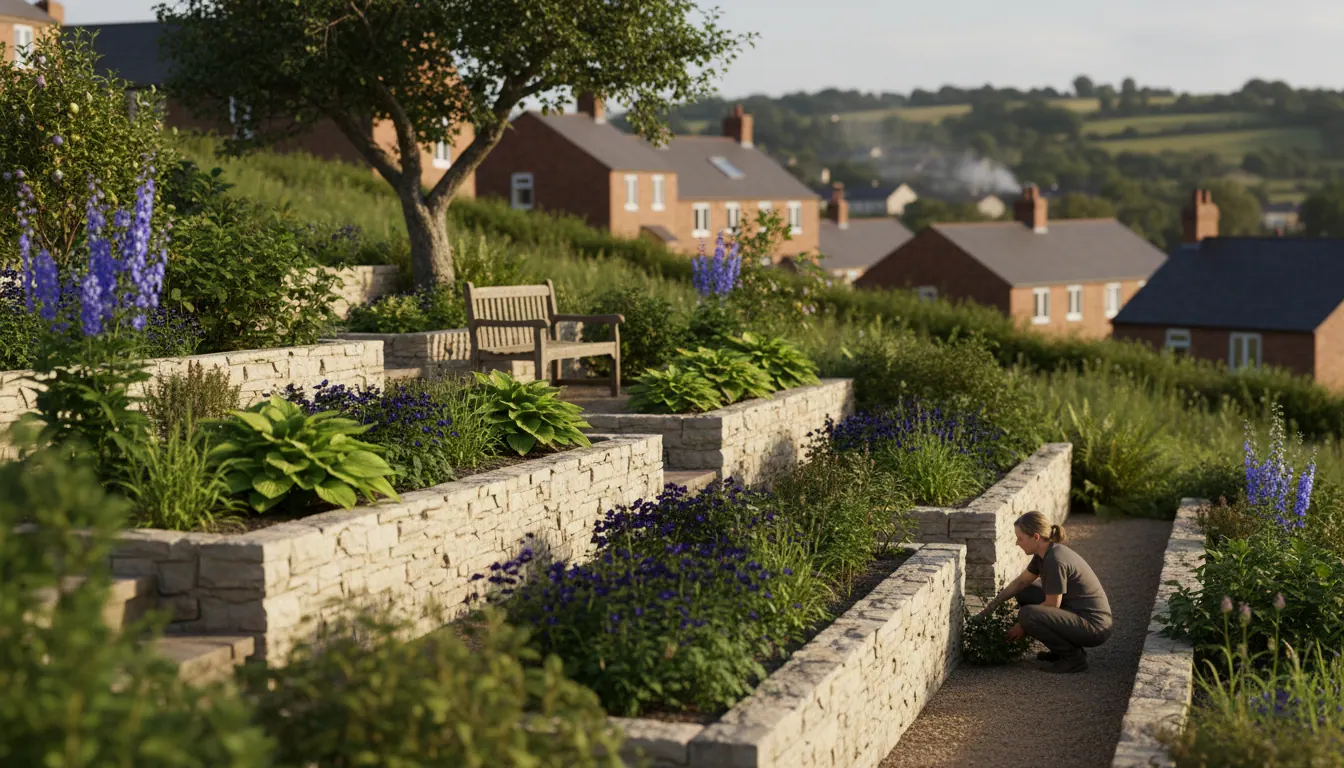
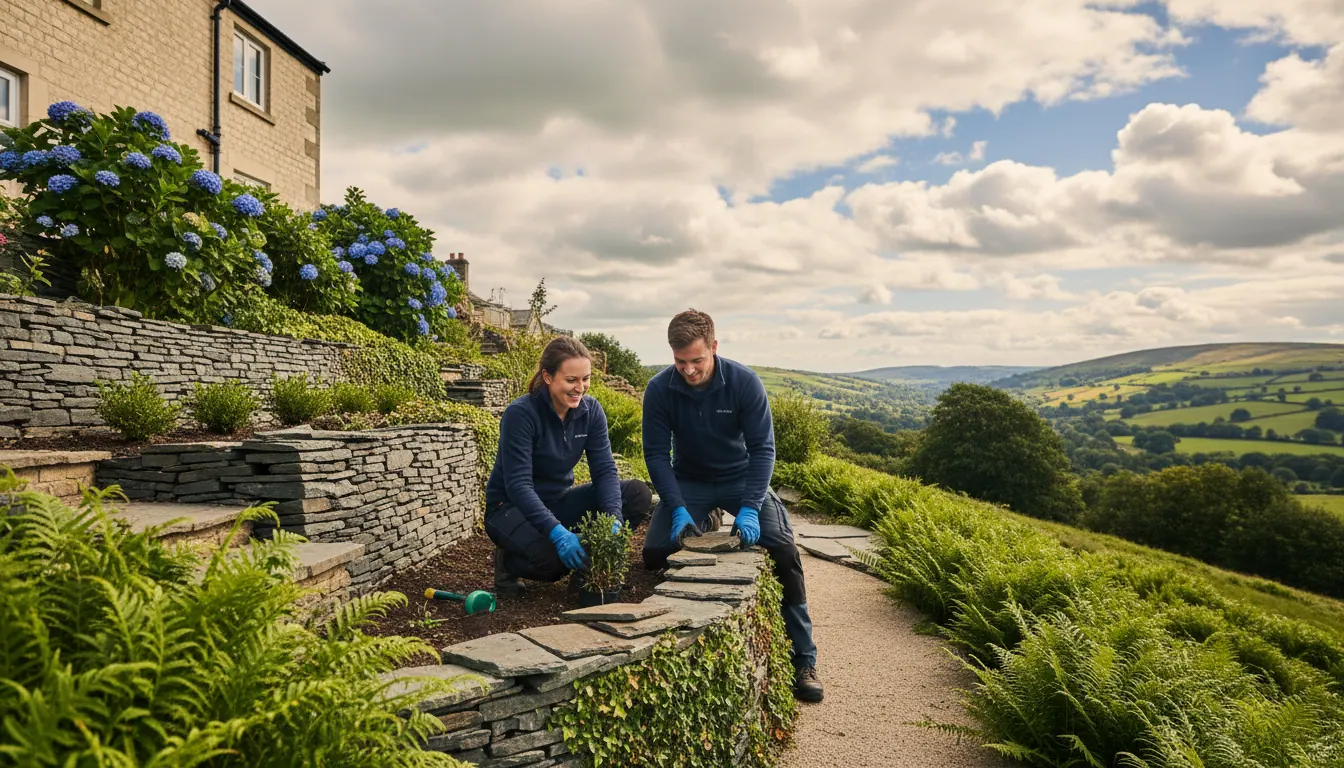
If your garden slopes significantly, it is worth reading our article on retaining walls and terracing as the two often go together.
What a Porcelain Patio Job Actually Looks Like
We start with a site visit and a free quote. We look at the existing ground conditions, the drainage situation, any levels that need addressing, and what the finished garden needs to do. A seating area for a family in Wakefield is a different brief to a courtyard garden behind a Victorian terrace in Batley.
Groundwork comes first. Strip the existing surface, excavate to the right depth, address any drainage issues before they are buried. Sub-base goes in and is compacted properly. Then the bedding mortar, then the slabs, set to the correct falls and with consistent joint spacing throughout. Jointing compound last, once the bed has cured.
We do not leave until it is pin-point perfect. That is not a phrase we use lightly. Levels, falls, joint consistency, clean edges, the way a step meets a lawn edge or a wall. Every detail gets checked. That is what twenty years of doing this work looks like in practice.
Frequently Asked Questions
Is porcelain paving suitable for Yorkshire's climate? Yes, provided it is laid correctly. Porcelain has very low water absorption and is frost-resistant as a material. The risk in our climate comes from poor sub-base preparation and inadequate drainage beneath the slab, not from the porcelain itself. Get the groundwork right and a porcelain patio will handle Yorkshire winters without issue.
Do I need planning permission for a porcelain patio in West Yorkshire? For most standard rear garden patios, no. Permitted development rights cover hard surfacing in rear gardens in most cases. Front garden or driveway situations have different rules around permeable surfacing and drainage. We would always flag anything unusual during the site visit, but a typical back garden patio in Barnsley, Dewsbury or Wakefield will not require a planning application.
How long does a porcelain patio installation take? It depends on the size and complexity of the job. A straightforward patio for a typical semi-detached garden will usually take a few days from groundwork through to finished jointing. Larger projects, or those involving steps, raised beds or retaining walls, take longer. We give a realistic timescale at the quoting stage.
Can porcelain slabs be laid over an existing concrete base? Sometimes, yes. If the existing concrete is sound, level and well-drained, it can serve as a base for a porcelain overlay. But if the concrete has cracked, settled unevenly or has drainage problems, laying over the top will not fix those issues. We assess the existing base honestly on the site visit and advise accordingly.
Ready to Talk About Your Patio?
If you are thinking about a porcelain patio in West Yorkshire or South Yorkshire, whether that is in Huddersfield, Barnsley, Penistone, Wakefield, Dewsbury, Batley or the surrounding areas, get in touch and we will come out, look at what you have got, and give you a free quote.
Call us on 07359 173155 and let us talk through what your garden needs.