New Turf in Spring: Preparing Clay Soil and Timing Turfing in Batley and West Yorkshire
Thinking about turfing in Batley this spring? We cover soil prep, levelling, drainage and laying for clay-heavy West Yorkshire gardens. Free quotes available.

A new lawn starts long before the first roll goes down
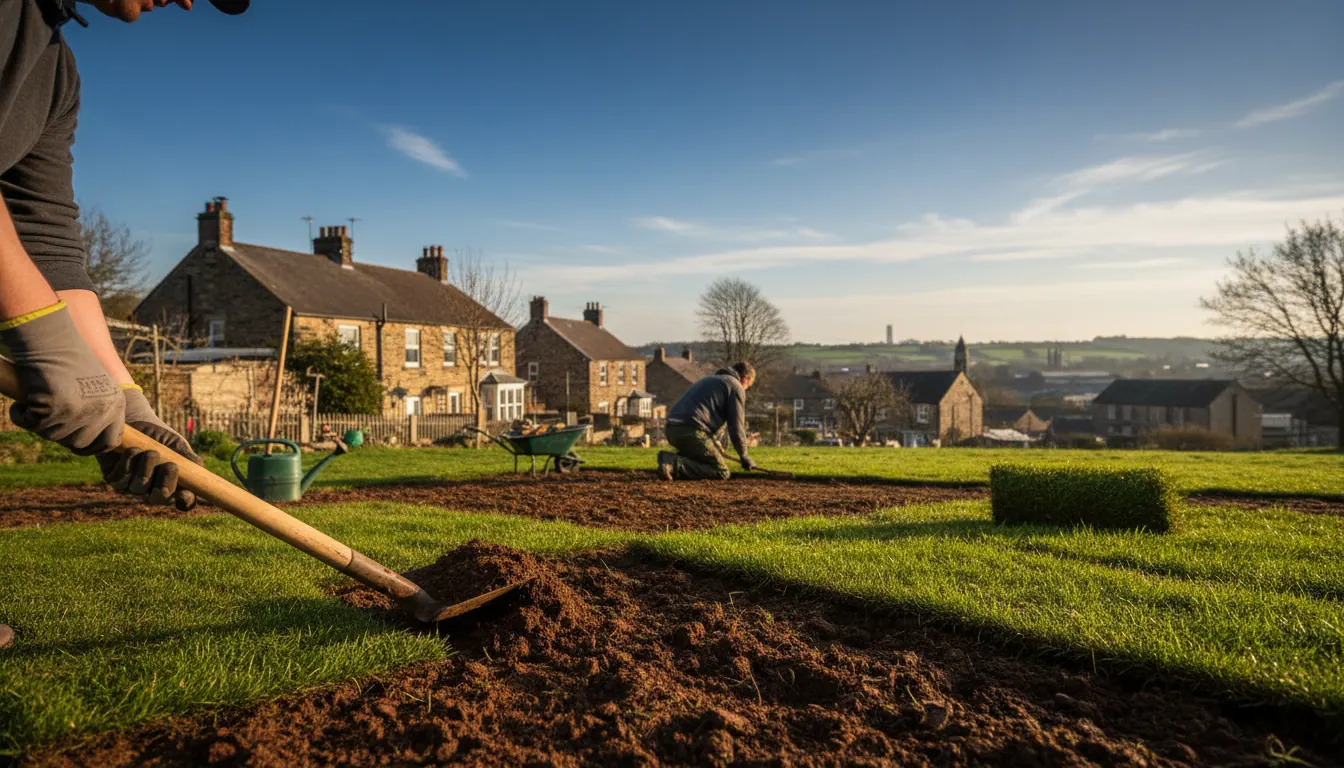
Spring is the moment most Batley homeowners decide they've had enough of the garden they've been looking at all winter. A patchy, compacted, waterlogged mess that's limped through from October to March doesn't fix itself. It needs proper work. And if you want a new lawn that actually lasts, the work starts well before any turf arrives on site.
We've been laying turf across West Yorkshire and South Yorkshire for over 20 years. Batley gardens, like a lot of plots in this part of the world, come with their own set of challenges: heavy clay soil, sloping ground, shade from stone-built terraces, and drainage that simply hasn't kept up with the rainfall. Get the preparation right and a new lawn beds in well. Skip it and you'll be back to bare patches and puddles by autumn.
This is how we approach turfing in Batley, from the first site visit through to the finished lawn.
Why spring is the right time to lay turf in Batley
April and May are the months we'd point most Batley homeowners towards for new turf. The soil is warming up after winter, there's usually enough moisture in the ground without needing to water constantly, and the grass has the whole growing season ahead of it to establish properly.
March can work if the ground isn't still frozen or waterlogged. June and July are harder because the heat and dry spells put new turf under stress before the roots have taken hold. Autumn is actually a solid second choice, but spring gives you the longest run-in before the first winter.
The short answer to "what month is best to lay turf in the UK?" is April, with May a close second. In Batley specifically, we'd always check the ground conditions first rather than go by the calendar alone. A cold, wet April in West Yorkshire can push things back by a few weeks.
The soil problem in Batley gardens
Clay soil is the reality for a lot of gardens in this part of West Yorkshire. It holds water, compacts under foot traffic, and bakes hard in a dry spell. Lay turf directly onto poorly prepared clay and you'll get a lawn that sits in standing water after rain and dries into a cracked surface in summer.
The fix isn't complicated, but it takes time and it takes doing properly.
We strip the existing surface first. That means removing the old dead lawn, weeds, any debris that's accumulated. Then we assess what's underneath. On a typical Batley garden that's had years of neglect, there's often compacted subsoil that needs breaking up before anything else happens.
If drainage is genuinely poor, we'll address it at this stage. That might mean incorporating sharp sand or grit into the top layer, or on more serious cases, a simple soakaway or channel drain at a low point. Laying turf over a drainage problem just buries the issue.
How to level soil before laying turf: what we actually do
Levelling is one of the things that separates a lawn that looks good for years from one that looks good for a fortnight.
We work to a consistent fall across the surface. The ground should never be dead flat: a slight gradient moves surface water away from the house and stops it pooling. In Batley, where a lot of gardens sit on a slope already, we're often working with the natural fall of the land rather than fighting it.
The process:
- Rotavate or break up the top 100-150mm of soil to loosen compaction
- Rake out stones, roots and debris by hand across the whole area
- Add topsoil where needed to build up low spots or create a consistent level
- Firm the surface with a roller or by foot, then rake again to a fine tilth
- Leave it to settle for a few days if time allows, then top up any dips before laying
That last point matters. Soil moves. If you lay turf onto freshly worked ground without letting it settle, you'll end up with humps and hollows appearing as the surface compresses under foot traffic and rainfall.
We don't rush this stage. The finish of the lawn depends entirely on what's underneath it.
Laying the turf: joints, edges and the first few weeks
Once the surface is prepared and we're happy with the levels, the turf goes down in staggered rows, like brickwork. Joints should never line up across the lawn. We butt each roll tight to the last, firm it down as we go, and cut edges cleanly with a half-moon or a sharp spade.
Edges matter more than people realise. A clean, straight edge along a path, a border or a fence line is what gives the finished lawn its shape. We take time over this because it's the detail that shows.
After laying, the turf needs watering in properly. In a dry spring spell in Batley, that means daily watering for the first two weeks, particularly in the mornings. The roots need to knit into the soil beneath. You can test this by gently lifting a corner: if it resists, it's taking hold.
First cut: wait until the grass has grown to around 50mm, then take off no more than a third of the height. A blunt mower blade on new turf does real damage, so it's worth sharpening before that first cut.
Sloping and awkward Batley gardens
A lot of Batley plots aren't flat rectangles. Stone-built terraced houses often have gardens that drop away from the back door, or narrow strips that sit at an angle to the fence line. We deal with these regularly.
On a steeper slope, turf can be laid but it needs pegging or pinning while the roots establish, otherwise the rolls shift after rain. On very steep sections, turfing isn't always the right answer: a retaining wall and a level lawn at a lower point will perform better and look better long term. We've done plenty of terracing work across West Yorkshire where the brief started as "just re-turf this slope" and became something more considered once we looked at it properly.
If your garden has a significant slope and you're thinking about what's actually possible, our article on retaining walls and terracing for sloping Yorkshire gardens covers the groundwork side of that in detail.
Re-turfing an established garden: what changes
Re-turfing isn't just laying new turf on top of old. If the existing lawn is patchy, compacted or has a drainage problem, those issues need addressing before new turf goes down.
The process is the same as a fresh lawn: strip, assess, prepare, level, lay. The difference is that you often have more to strip out. Old grass, thatch, moss, compacted layers that have built up over years. We rotavate and work the soil to give the new turf the best possible start.
One thing worth saying: if the reason the old lawn failed was shade, no amount of re-turfing will fix it permanently. A heavily shaded Batley garden under a fence or a stone wall might be better served by a different surface treatment. We'd always say that honestly on a site visit rather than lay turf that won't thrive.
For a broader look at the options, our piece on artificial grass versus real turf in West Yorkshire runs through the practical differences, including which conditions suit each.
Frequently asked questions about turfing in Batley
What month is best to lay turf in West Yorkshire? April is generally the sweet spot. The soil has warmed up enough for roots to establish quickly, and there's usually enough natural moisture to reduce the watering burden. May works well too. We'd avoid the height of summer for new turf, and we'd always check ground conditions before committing to a date regardless of the month.
How do you level soil before laying turf? We rotavate the top 100-150mm, rake out stones and debris, add topsoil to low points, firm the surface and leave it to settle before a final rake to a fine tilth. The surface needs a slight fall to move water away from the house. Getting this stage right is what determines whether the finished lawn stays level over time.
How do you re-turf an existing lawn? Strip the old lawn completely, assess the soil underneath, address any drainage or compaction issues, then prepare and level as you would for a fresh installation. Laying new turf over an unresolved problem just delays it. We always work from the ground up.
Does clay soil in Batley need special preparation before turfing? Yes. Clay compacts, holds water and doesn't drain freely. We break it up, improve the structure where needed with sharp sand or grit, and make sure drainage falls are built into the surface. On gardens with persistent standing water, we'll address the drainage properly before any turf goes down. A new lawn laid over poor drainage won't last.
Ready to sort your Batley garden this spring?
If your lawn has had a rough winter and you want it properly sorted before summer, we're taking bookings now across Batley, Dewsbury, Wakefield, Huddersfield, Barnsley, Penistone and the surrounding areas of West and South Yorkshire. Quotes are free. We'll come out, look at the ground conditions, and tell you exactly what the job involves.
Call us on 07359 173155 to arrange a free quote, or drop us a message on WhatsApp at the same number.