Artificial Grass vs Real Turf in West Yorkshire: Which Suits Your Garden?
Artificial grass or real turf for your West Yorkshire garden? We weigh up both honestly, from drainage and maintenance to long-term cost and finish.
Artificial Grass vs Real Turf in West Yorkshire: The Honest Comparison
A lawn is usually the first thing people see when they step into a back garden. Get it right and the whole space feels finished. Get it wrong and you're fighting it every season. We've laid both artificial grass and real turf across gardens in Huddersfield, Barnsley and throughout West and South Yorkshire, and the question we get asked more than almost any other is: which one should I choose?
There's no single answer. The right choice depends on your garden, your household, your soil and what you actually want to do with the space. What we can do is give you the honest breakdown, the way we'd explain it standing in your garden rather than trying to sell you something.
What Real Turf Actually Involves
Turfing a garden properly isn't just rolling out some grass and watering it in. The groundwork is where the job is won or lost.
A proper turfing job starts with clearing the existing surface, breaking up compacted ground and grading the levels. Across West Yorkshire, a lot of gardens sit on heavy clay soil that holds water badly. If you don't address drainage before you lay turf, you'll have a waterlogged, muddy lawn within a season. We dig in, improve the sub-base where needed, and make sure any falls are right so water moves away from the house and doesn't pool.
Then the turf itself goes down on a prepared, raked seedbed, butted tight at the joints, edges cut clean. It needs watering in properly over the first few weeks. After that, it establishes and starts to behave like a real lawn.
Real turf works well when:
- You have a garden that gets reasonable sun and isn't heavily shaded
- You want a natural look and feel underfoot
- Children or pets will use the lawn and you're happy with the maintenance involved
- The soil and drainage are in decent shape, or can be made so
The honest downside? Real turf needs work. Mowing through the growing season, feeding, scarifying, aerating, weeding. In a wet Yorkshire summer it can grow fast. In a dry spell it browns off. On a sloping garden it can be hard to establish evenly. It's a living thing, and it behaves like one.
What Artificial Grass Actually Involves
Artificial grass has come a long way. The products available now look genuinely good when they're laid correctly. The key phrase there is "laid correctly."
We've seen artificial grass jobs that have failed within a couple of years because the preparation was poor. The sub-base is everything. We excavate the existing ground, lay a compacted MOT Type 1 sub-base, add a sharp sand layer, and only then do the grass go down. Every edge is fixed properly. Joins are invisible when they're done right. The falls are set so water drains through the membrane and away, not sitting underneath and causing the surface to lift or smell.
Get that groundwork right and artificial grass is genuinely low-maintenance. No mowing, no feeding, no brown patches in August. It looks the same in November as it did in May.
Artificial grass works well when:
- You have a heavily shaded garden where real turf struggles to establish
- You want a garden that looks tidy year-round with minimal effort
- You have young children who use the garden hard and you want a clean, safe surface
- You have a sloping or awkward-shaped garden where mowing is difficult
- You want to free up time and reduce ongoing costs
The honest downside? Artificial grass is a larger upfront investment than turf. It doesn't have the same feel as natural grass underfoot on a hot day. And it needs an occasional brush and rinse to stay looking its best, especially if you have dogs.
How West and South Yorkshire Gardens Affect the Decision
This matters more than people realise. Gardens in Huddersfield and across the Pennine fringe are not the same as gardens in the south of England. We get more rainfall, heavier clay soils in many areas, and a lot of gardens are on slopes or have awkward levels thanks to the local topography.
Real turf on a steeply sloping garden in Huddersfield, for example, can be genuinely difficult to establish and even harder to mow safely. Artificial grass on the same slope, laid over a properly compacted sub-base with the right drainage, can transform an unusable bank into a usable, tidy surface.
Shaded gardens are another factor. A lot of Victorian terraced properties around Huddersfield have narrow back gardens with high walls or fences on two or three sides. Real turf in deep shade turns thin and mossy. Artificial grass doesn't care about shade.
On newer estates around Barnsley, you often see larger, more open gardens where real turf can thrive if the drainage is sorted. Those gardens suit either option, and the decision comes down more to lifestyle than soil conditions.
If you're weighing up drainage and levelling as part of a wider garden project, our article on how to fix a muddy, sloping garden in West Yorkshire goes into the groundwork side in more detail.
The Cost Comparison: What to Expect
We're not going to give you a definitive price here because every garden is different. What we can tell you is how the two options compare in broad terms.
Real turf is generally lower cost upfront. The materials are cheaper and the labour, while skilled, is less intensive than artificial grass installation if the ground is in reasonable shape. The ongoing cost, though, is your time and the occasional spend on feed, weed treatment and maintenance.
Artificial grass costs more upfront. The materials are more expensive and the groundwork is more involved. A proper installation means excavation, sub-base, membrane, sand layer, the grass itself and all the edging. Cut corners on any of those and you'll regret it.
Over five to ten years, the two often come close to level when you factor in the time and money spent maintaining real turf. That's a genuine consideration for busy households.
Both options benefit from getting the preparation right from the start. A cheap turfing job on poor ground will fail. A cheap artificial grass installation on an inadequate sub-base will fail faster and look worse doing it. We've been doing this for over 20 years and the finish always comes back to what happens before the surface goes down.
The Finish: What Makes the Difference
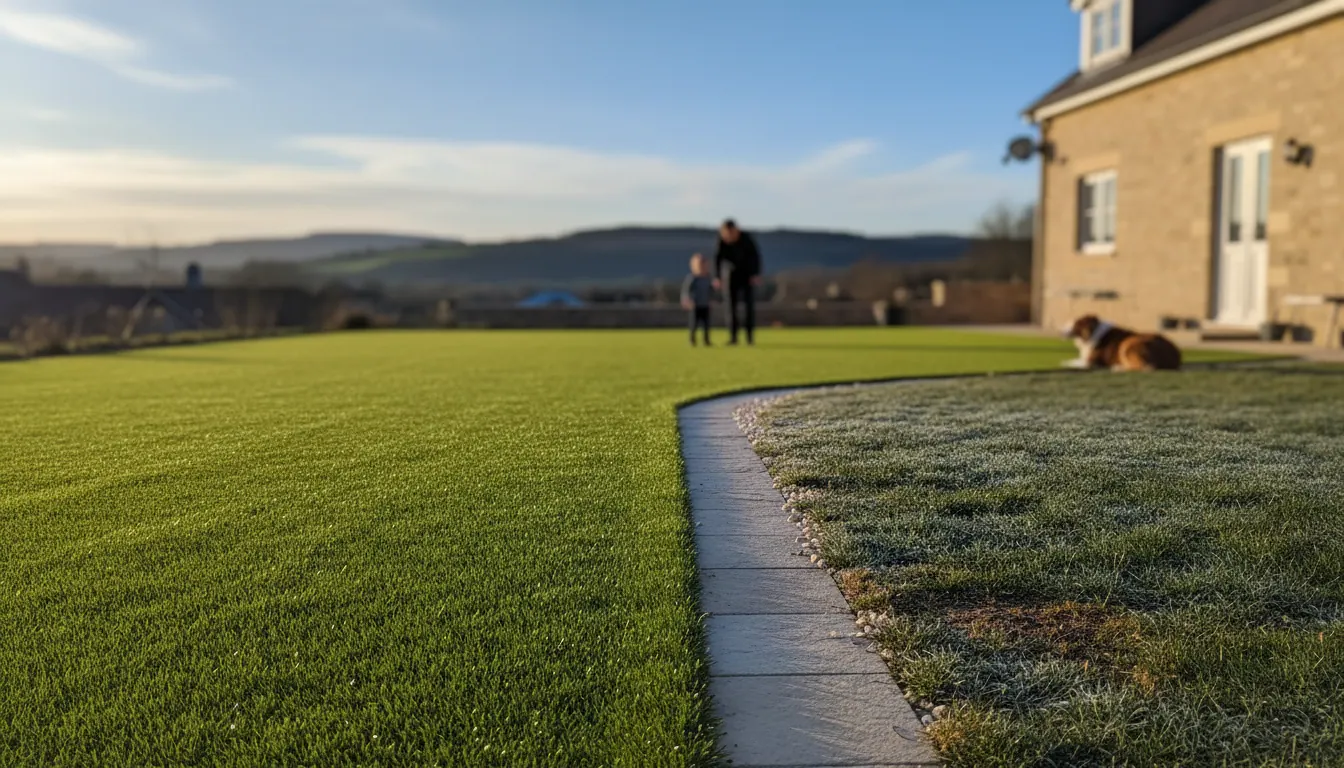
This is what we care about most. A lawn, whether real or artificial, should look like it belongs in the garden. The edges should be crisp. The levels should be right. The surface should be even. There should be no joins visible, no lifting corners, no pooling water.
With real turf, the finish comes from the quality of the preparation, the tightness of the joints and the precision of the edge cuts. With artificial grass, it comes from the same preparation, plus the invisible seaming and the way the edging is fixed and finished.
We don't leave a job until it's pin-point perfect. That's not a phrase we use lightly. It's the standard we hold ourselves to on every garden we work on, whether it's a small terrace in Huddersfield or a larger property in Barnsley.
For a wider look at what a full garden transformation involves from start to finish, see our piece on garden makeover vs maintenance and what counts as landscaping work in West Yorkshire.
Frequently Asked Questions
Does artificial grass drain properly in heavy Yorkshire rainfall? Yes, when it's installed correctly. A properly laid artificial grass installation includes a permeable membrane and a compacted sub-base with the right falls built in, so water drains through and away. The issue only arises when the groundwork is cut short. In Yorkshire's climate, drainage is non-negotiable, and we treat it as such on every job.
How long does real turf take to establish in West Yorkshire? Generally four to six weeks before it's properly rooted and ready for regular use, assuming it goes down at the right time of year and gets adequate watering in. Spring and early autumn are the best windows in West Yorkshire. Summer laying is possible but needs more careful management in dry spells.
Is artificial grass a good choice for a garden used by children and dogs? It's one of the most common reasons people choose it. It's robust, easy to clean and stays usable year-round without turning into a mud bath. The main thing to stay on top of with dogs is rinsing the surface regularly. The quality of the grass product matters too. We only use materials we're confident in.
Can you lay artificial grass on a sloping garden? Yes, and it often works better than real turf on a slope. The key is getting the sub-base compacted properly on the gradient and making sure the drainage falls are correct. A sloping garden that's been a problem for years can be transformed into a clean, usable surface. We do this regularly across West and South Yorkshire.
Ready to Make a Decision?
If you're still not sure which option suits your garden, the best thing we can do is come and take a look. We offer free quotes, no obligation, and we'll give you a straight answer about what will work in your specific garden rather than pointing you towards the more expensive option.
Get in touch with us and we'll arrange a visit at a time that suits you. We cover Huddersfield, Barnsley and the wider West and South Yorkshire area.