Raised Beds and Garden Walls: Terracing Small Victorian Yards in Dewsbury and Batley
Raised beds and garden walls built to last in Batley and across West Yorkshire. Beautiful Landscapes explains what proper construction really involves.

Raised Beds in Batley: What a Proper Build Actually Involves
Plenty of Batley gardens have the bones of something good. A sloping plot, a bit of awkward space down the side, a tired corner that has never quite worked. Raised beds and garden walls are often the thing that finally makes sense of that space, and they are one of the most requested jobs we do across West and South Yorkshire.
But a raised bed is not just a box you fill with soil. Done properly, it is a structural element. Done badly, it moves, cracks, bows out or collapses within a couple of winters. Yorkshire winters, with the freeze-thaw cycles and the rainfall that comes off the Pennines, are not forgiving to anything that was not built right from the ground up.
Here is what we actually do, and why it matters.
Why Batley Gardens Suit Raised Beds
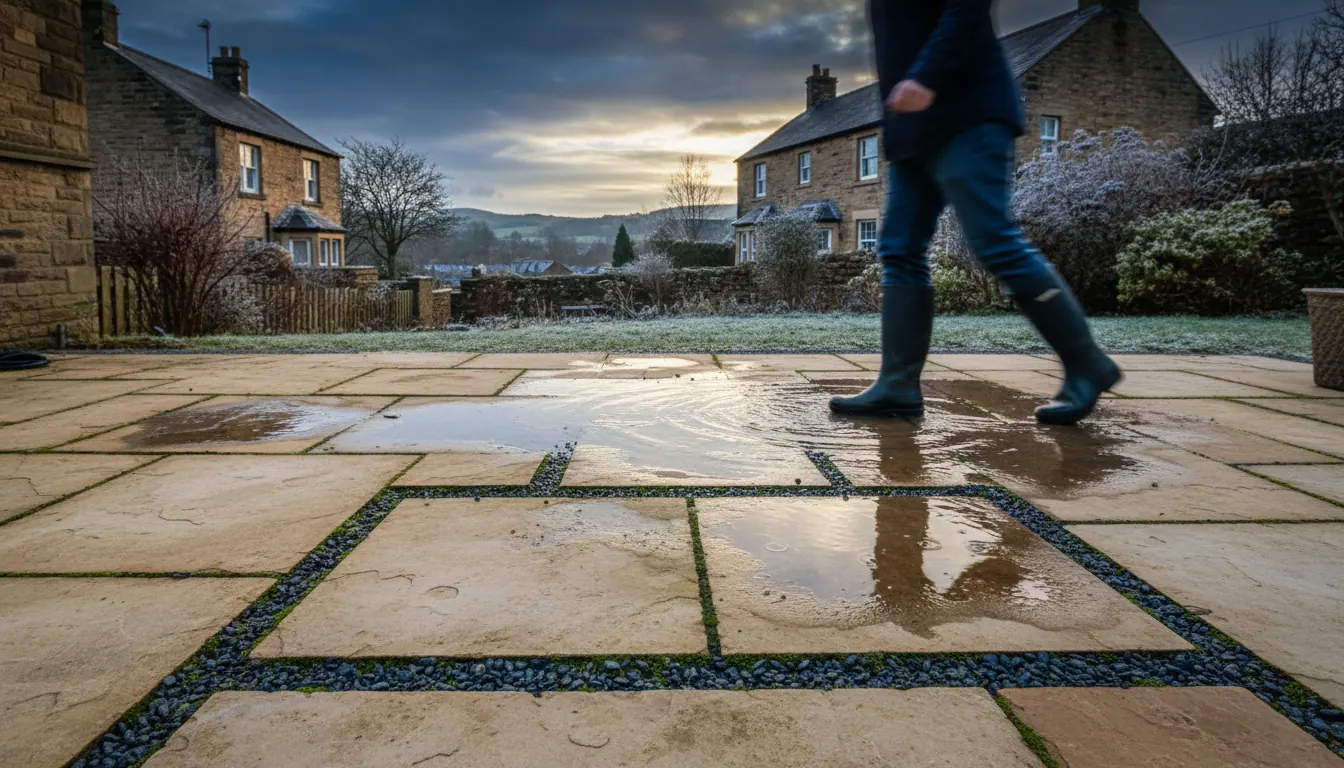
Batley sits in a landscape that is part valley bottom, part hillside, with a mix of Victorian terraces and newer semi-detached plots. The soil in a lot of these gardens is heavy clay. It holds water, it compacts, and it drains badly. Lawns waterlog. Borders stay wet for weeks. Trying to grow anything in raw clay without amending it is a losing battle.
Raised beds solve this directly. You are building above the existing ground level, filling with proper growing medium, and giving plants the drainage and soil structure they cannot get from the clay underneath. That is the practical case. The visual case is just as strong: a set of well-built raised beds with clean lines and a proper finish transforms a flat, featureless garden into something with structure, depth and purpose.
We work across Batley and the surrounding areas of West Yorkshire, and the combination of clay soil, compact plots and stone-built properties makes raised beds one of the most useful things we install.
Materials: Choosing What Suits Your Garden
We build raised beds in a few different materials depending on what the garden calls for and what the customer wants.
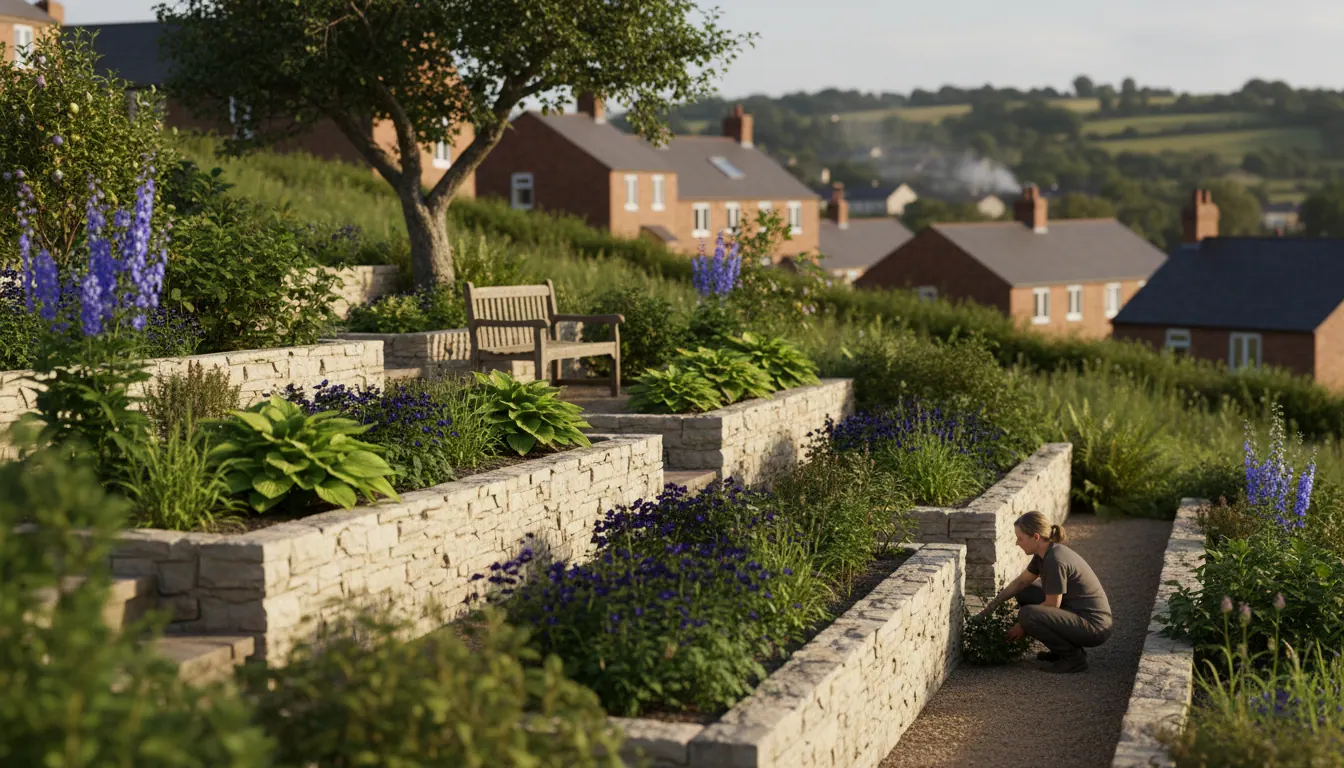
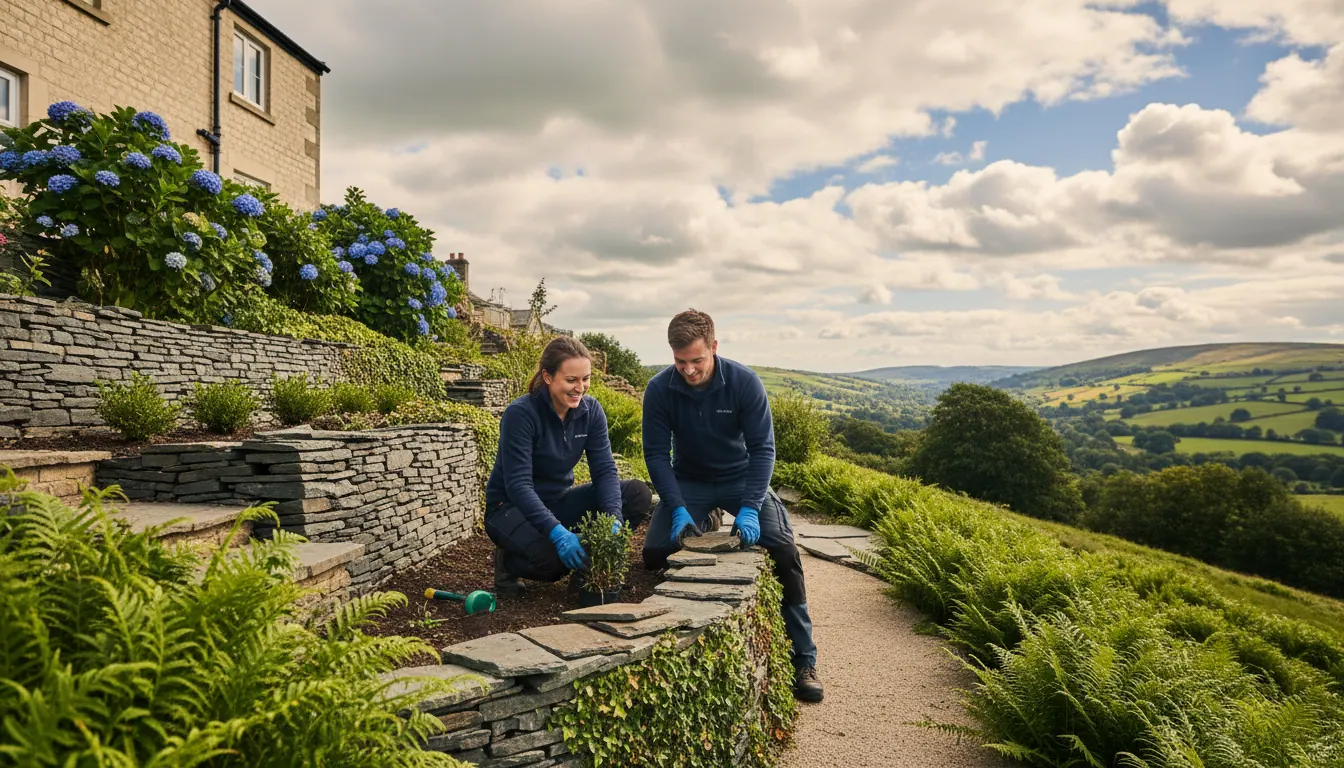
Natural stone and slate-faced walls suit the older stone-built properties common across Batley, Dewsbury and the wider West Yorkshire area. A raised bed faced in natural stone ties into the character of the house and the boundary walls. The finish is solid, the colour is right, and it weathers well over time.
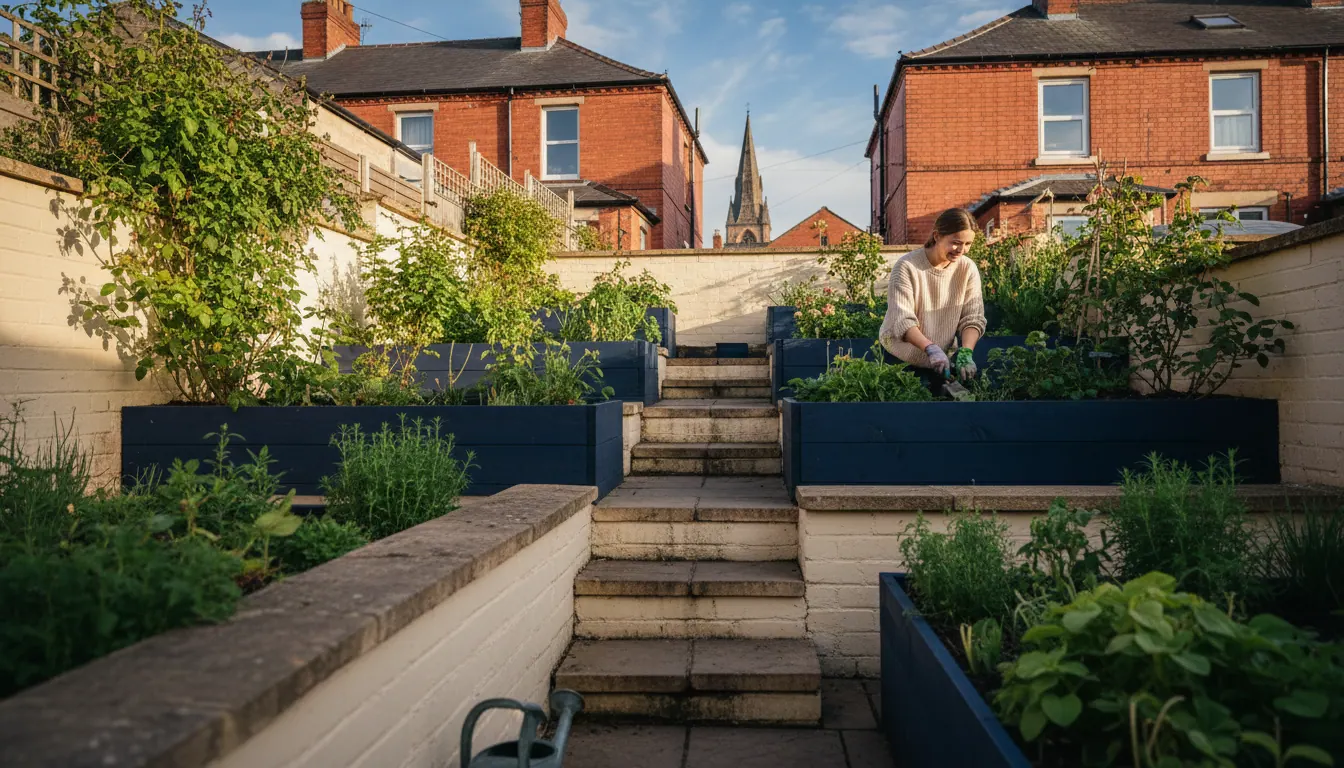
Timber sleepers are a popular choice for a cleaner, more contemporary look. Proper hardwood or treated sleepers, stacked and pinned correctly, give a strong structural edge that holds its shape. We do not use flimsy thin-cut timber or cheap pressure-treated boards that bow and split after a couple of seasons.
Porcelain or sandstone-faced raised beds sit well alongside a patio. If you are having a seating area laid at the same time, a matching raised bed surround ties the whole space together.
The material choice matters less than the construction underneath it. Whatever facing you choose, the build needs to be solid.
How We Build Them: The Groundwork That Makes the Difference
This is where most raised beds fail when they are not built by someone who knows what they are doing.
Foundations. Even a raised bed needs a footing. On clay ground, anything that is just sat on the surface will move with the frost and the moisture cycle. We dig down to stable ground and lay a concrete base or a compacted hardcore footing depending on the height and weight of the structure.
Drainage within the bed. The whole point of a raised bed is better drainage, so we make sure the base layer allows water to escape. That means a layer of rubble or gravel at the bottom before any growing medium goes in. On a garden with a genuine drainage problem, we might also install a perforated pipe to carry water away from the base of the structure.
Wall ties and structural integrity for taller builds. A raised bed over about 450mm high is carrying real weight once it is full of soil and wet. The walls need to be built to take that lateral pressure without bowing. For stone or block construction, that means proper mortar joints, ties where needed, and a batter (a slight inward lean) on taller walls.
Falls and levels. The top course needs to be level, or deliberately graded if it is part of a terraced scheme. We take this seriously. An uneven coping looks wrong immediately and it gets worse as the structure settles.
If you want to understand how drainage and levelling sit within a wider garden build, our article on how to fix a muddy, sloping garden in West Yorkshire covers the groundwork principles in more detail.
Raised Beds as Part of a Full Garden Design
Raised beds rarely work in isolation. The best results come when they are planned as part of a complete layout: where the patio sits, how a path connects the spaces, where the lawn or artificial grass goes, and how the raised beds frame the whole thing.
A Batley back garden that is awkward and sloping can be terraced using a combination of retaining walls and raised beds to create distinct levels. One level for seating, one for planting, a path connecting them. That is a proper garden design, not just a few boxes dropped onto a lawn.
We do the full job: design, groundwork, paving, walls, beds, turf or artificial grass. Everything finished to the same standard, by the same team.
Our piece on retaining walls and terracing: building usable spaces on sloping gardens in Yorkshire goes into the specifics of working with slopes, which is relevant for a lot of Batley plots.
What We See Go Wrong on DIY Raised Beds
We are not here to be harsh about it, but we do get called to fix raised beds that have failed. A few patterns come up repeatedly.
- Sleepers pinned with coach screws that were too short, so the corners open up under soil pressure
- Stone walls laid without mortar or with weak mix, so frost gets into the joints and the face starts to spall and shift
- No base drainage, so the bed sits in standing water and the roots rot
- Raised beds built directly against a house wall without a damp-proof course separation, causing damp problems
- Beds that were level when built but were not founded properly, so they have settled unevenly
These are not small cosmetic problems. Most of them mean taking the structure down and starting again. The groundwork is what you are paying for when you hire someone with experience. The facing is what you see. The foundation is what makes it last.
Raised Beds Across Our Service Area
We cover Batley and the surrounding areas of West Yorkshire, and also work across into South Yorkshire including Barnsley, Wakefield, Dewsbury, Penistone and Huddersfield. The same clay soils, the same sloping plots, the same need for structures that can handle Yorkshire weather.
Raised beds suit all of these areas. Victorian terrace yards in Dewsbury where there is no lawn at all and the whole garden is hard-standing benefit enormously from a well-built raised bed giving greenery and structure. Newer estates in Wakefield where the garden is flat and featureless get shape and interest from a tiered raised bed scheme. Exposed hillside plots in Penistone need materials and construction that can handle wind and frost.
We quote each job individually once we have seen the space and understood what is needed. Quotes are free.
Frequently Asked Questions
What is the best material for raised beds in a Batley garden? It depends on the style of the property and the garden. Natural stone or slate-faced walls suit older stone-built houses and tie in with existing boundary walls. Timber sleepers work well for a contemporary or kitchen-garden look. Porcelain-faced raised beds suit modern gardens, especially alongside a porcelain patio. We will advise on what fits once we have seen the space.
How deep does a raised bed need to be to grow vegetables? For most vegetables, a minimum internal depth of 300mm is workable, but 450mm to 600mm gives roots proper room and improves drainage further. For deeper-rooting crops like carrots or parsnips, going deeper still makes sense. We build to whatever depth suits the use.
Do raised beds need planning permission in West Yorkshire? In most cases, no. Raised beds and low garden walls under a certain height do not require planning permission for domestic gardens. However, if your property is in a conservation area or is a listed building, there may be restrictions on materials or structures. It is worth checking with Kirklees Council (for Batley and Huddersfield) or the relevant local authority before work starts.
Can raised beds be added to a sloping garden in Batley? Yes, and they often work especially well on sloping plots. A series of raised beds at different levels, connected by steps or a path, effectively terraces the garden and makes the slope an asset rather than a problem. We do this kind of work regularly across West and South Yorkshire.
Get in Touch
If you have a garden in Batley or anywhere across West or South Yorkshire and you want raised beds or garden walls built properly, with real foundations and a finish that holds up, we would be glad to come and have a look.
Over 20 years of experience goes into every job we take on. We treat your garden like it is ours, and we do not leave until it is absolutely pin-point perfect. It is all about the finish.
Call us on 07359 173155 to arrange a free quote.